Institute of History NAS RA


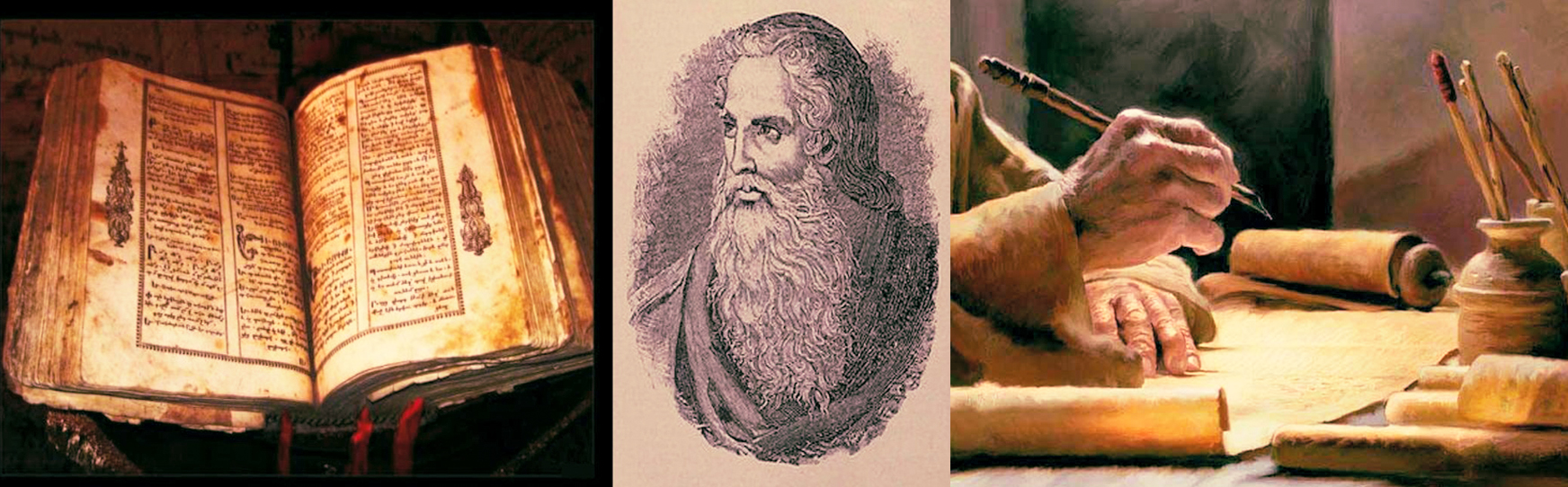
Armenian Historiography originated in the 5th century. At the turn of that scientific-cultural period under the guidance of the patriarch of the historiography, Movses Khorenatsi a set of representatives (Agatangexos, Pavstos Buzand, Exishe, Khazar Parpeci) of the Armenian historiography appeared. The monumental writing of Movses Khorenatsi is also a major source for studying the ancient history of Caucasian and Middle Eastern nations.
The creation of historical works developed in the following centuries.
In the second half of the 18th century by the Armenian History of Michael Chamchian, consisted of three volumes, Armenian critical Historiography was set up. This was developed during the second half of the 19th and the first half of the 20th century.
The creation of the Institute of History at the Armenian Academy of Sciences, in 1943, stimulated the future development of Historiography. The Institute became the centre of historical thinking and expert training in Armenia.
With the famous representatives of previous generation, young scholars entered to the sphere of science, whose research was based on separate themes and new methods. The Institute underwent with a planned research on all the centuries of History of Armenia.
The achievements in studies of Ancient History of Armenia are significant. The attention of scholars in this field was focused on a difficult, but the same time important topic, the task of formation of the Armenian language and the origins of Armenians.
The history of ethnicity and ethnic unions of the Armenian Plateau and their relations and contacts with the neighbouring countries was deeply studied. The experts, (Gr. Khapantzian, S. Eremian and etc.) assuredly proved the fact that Armenians are aborigines and the Armenian Plateau is their motherland. The majority of scholars, based on comparison of sources, concluded that the formation of Armenians began as far as 2-3000 years ago and finished at the 6th century B.C.A. The Armenian historians reached significant successes in the spheres of studies of the political history, State System, economic life, spiritual and material culture of the Kingdom of Van. The excavations of the Armenian Archaeologists shed a new light on this task.
The input of H. Manandian in studies of the political and economic life of the Ancient Armenia was of particular importance. In his work "The Critical Theory of the History of Armenian Nation", he enlightened the birth of the unified Armenian statehood, its inner and external factors of becoming one of the Great Powers in the Near East, described one of the prominent leaders of the ancient times, Tigran the Great, in a new light.
The tasks, which were out of the attention of scholars, of the culture and history of Ervanduni dynasty (6-3 centuries B.C.A.), were worked out. The research and works on the culture of the Ancient Armenia were summarised.
In 1950-ies, a new theory (S. Eremian, etc.) on the Social System of the Ancient Armenia was suggested, according to which the System of the Ancient Armenia was identified with that of the of the Greek-Roman Slavery System. It was not apprehended much.
In some works (G. Sarkissian, etc.), have been found out the development of the Social System of the Ancient Armenia, its peculiarities and trends, including urban life, trade and workmanship. In the sphere of studying the political, social-economical and cultural history of the Ancient Armenia, the Armenian Historiography made decisively positive steps.
In studies dedicated to the history of Middle ages, the political events of the above mentioned times had been enlightened, especially giving importance to the social-economic affairs.
Summarising the existing results of the studies, a scientific periodical systemisation of the Ancient and Armenia of the Middle Ages had been worked out. Was given, separately for each, the scientific characteristic of that long historical period, the history of political outline.
The Armenian historians, dealt with the Middle Ages, made significant research on the Armenian Kingdoms, feudal principalities and the tasks of the inner and external affairs of the country, while under the reign of the Arab, Byzantine, Selguk, Tartar, Mongol, Turckmen, Turkish and Iranian governance (L. Babaian, A. Ter-Ghevondian, etc.).
Valuable research was done on the developed cities of feudal system, were reviewed trade and workmanship, analysed the inseparable from that of the history of Armenia, the political and social-economical life of the Cilician Armenia, was shown the social-economical factors for its formation and false, its international position. In recent years the scientific interest in history of Arcax was raised (B. Ulubabian). Though working out the social-economical history of Armenia of the Middle Ages, some of the Armenian historians couldn't avoid from the copying the widespread schemes of the Soviet Historiography and imported it into Armenia. One of the most important national institutes, the history of the Armenian Church, was excluded from their works and, the sectarian movements of Armenian of the Middle Ages observed as only of social character.
The historical Geography of Armenia of the Ancient times and Middle Ages was also in the core of research of the Armenian historians. Important works and historical maps dedicated to this field were published.
The movements for freedom are a special part in History of Armenia of the Middle Ages. Ashot Hovhannisian dealt with this task. He studied the movements for freedom from the early Middle Ages to New Times. The author showed the quest for freedom, based on social-economical and political connections of Armenia with other countries.
One of the achievements of the Armenian Historiography is the publications and studies of the sources of the ancient times and the Middle Ages. Serious work had been done in compilation of the manuscripts, summarising t he results of short chronologies and, in the creation of the critical and original copy of the "Lawbook" and in its publication (L. Khachikian, V. Hakbian, etc.). The major work "Armenian Bibliography" (H. Anasian) is also of great value. The work on compilation of the critical and original copies of the Armenian historiographers and its publications were also significant.
In studying the Armenian History, the foreign sources facilitate greatly. There exists the work called "Foreign Sources on Armenians and Armenia", which has separate columns. Have been translated and in a scientific way have been presented to a reader various Assyrian, Greek, Byzantine, Arabic, Turkish sources (S. Krkasharian, H. Bartikian, etc.).
The research in the history of New Era, was mainly about central tasks of the social-political affairs. More attention was paid on the basic tasks of the Armenian movement for freedom. Various works have been dedicated to the formation and strengthening of the pro-Russian orientation in the Armenian movement for freedom and to the union of the Eastern Armenia to Russia, which was a decisive event in the fate of Armenians. The experts (Abg. Hovhannisian, M. Nersisian, V. Parsamian, G. Galoyan, V. Diloyan, etc.) of this topic showed that due to this historical event the Armenians of the Eastern Armenia had been escaped from assimilation, comparatively positive conditions had been provided for their future progress. But, because of the intervention of the powerful European countries, the western part of Armenians remained under the rule of Turkey, which had negative and ill-fated consequences on them.
A significant progress has been recorded in the enlightenment of the Movement of Armenians against the Turkish tyranny at the 19th century and, its separate episodes, the heroic revolt of Zeitun in 1862, and the Internationalisation of the Armenian Question.
The compilation f documents on the Armenian-Russian relations are aslo of importance. A lot of invaluable archival documents are included in them (V. Voskanian, C. Axgayan, Tavaqalian, etc.).
The works of the Armenian historians in 1950-60-ies became more valuable. Works on World War I (J. Kirakossian, etc.) and on the Armenian Genocide, and documents collections appeared, namely, "The Genocide of Armenians in the Ottoman Empire, 1878-1923" (The Collection of Documents) under the editorship of M. Nersisian. In recent years was published new collection of documents on the Armenian Genocide, based on the German archival materials (V. Michaelian, etc.).
On of the achievements of the Armenian historiography is the research on the Armenian colonies and Diaspora (Spyurk), which can be considered as a new trend in Armenian Studies, if excludes some single works in the past in this area.
The creation of the Armenian colonies and their existence up to our days is one of the historical peculiarities of the development of Armenians. Without studying the history of Diaspora Armenians, it is not possible to create the full and scientific history of Armenians, as for centuries not only much of the Armenians were out of their homeland, but also the social-political and cultural centres.
With such an important approach to the task, at the beginning of 1960-ies great works were undertaken to study the colonies of Armenians in Russia, Europe, Asia, and Africa and in American countries and the Diaspora. A lot of works on social-political conditions, cultural life, on the topic of rescuing the national identity and the relations with the nationalities of the guest countries of the Armenians in Diaspora, have been written. In these works, the historical relations of Armenians with other nations in the World and, especially their cultural impact on one another have been also enlightened (K. Dallaqian, L. Khurshudian, V. Michaelian, V. Barxudarian, S. Hovnanian, etc.).
In the core of the attention of the experts were mainly the Modern Times, the history of Soviet Armenia. Various works on the establishment of Soviet rule have been produced (G. Gharibganian, C. Aghayan, G. Galoyan, H. Avetissian, H. Simonian, etc.). In them a decisive role of establishment of the Soviet rule in active economic, cultural and social-political development of Armenians has been shown.
In post-war years great attention was dedicated to the peasantry and labour class, as well as to the agriculture and production, the urban development, and the history of the creation of the intelligence in the field of techniques. A lot of books have been published, where the authors outlined the development in various fields of Science, Culture and Education (K. Khudaverdian, A. Simonian, K. Kozmoyan, etc.).
The participation of Armenians in the Great Patriotic War, the partisan struggle and resistance movement, the heroic acts of Armenians in the fronts have been enlightened (A. Mnacakanian, V. Ghazakhecian, K. Harutyunian, etc.). The collection of documents and materials on the October Revolution, the establishment of Soviet rule, the political history of the First Armenian Republic, the participation of Armenians in the Great Patriotic War, 1941-1945, etc. have been published.
The results of the historical research were summarised in the work of History of Armenians, consists of eight volumes, created by the Institute of History of the Academy of Sciences, by the involvement of the experts of the Republic in the Social Sciences (G. Galoyan). Though, the Armenian Historiography had a great past, but such a valuable work had been created for the first time. The work, consists of eight volumes, was awarded with a republican State Prise and, much questions which hadn't their solution before, was enlightened in that major writing.
The false of the totalitarian regime, the declaration of the independence of Armenia laid new tasks before the Armenian historians. The ruling ideological impediments and obstacles didn't allow them to enlighten objectively the most important historical and national events of the end of the 19th and the 20th centuries. The history of the First Armenian Republic, Armenian Church, Political Parties were presented in a narrow and one-sided manner, falsified and, the History of the Communist Party of Soviet Armenia-in a very colourful way.
In the period of the Second Armenian republic the works of historians divided into two trends, to answer to the urgent tasks of the life in the new situation and without any imposed obstacles, based on fresh documents and material, to overcome the mistakes of the Soviet Historiography.
At the beginning of the Arcax movement the NAS of RA was first in the creation of the scientific-informative work "The Mountainous Kharabakh" (G. Galoyan), which was translated into several languages and introduced the public to the legal-political and historical aspects of the problem. "The Mountainous Kharabakh, 1918-1923" the collection of documents was published.
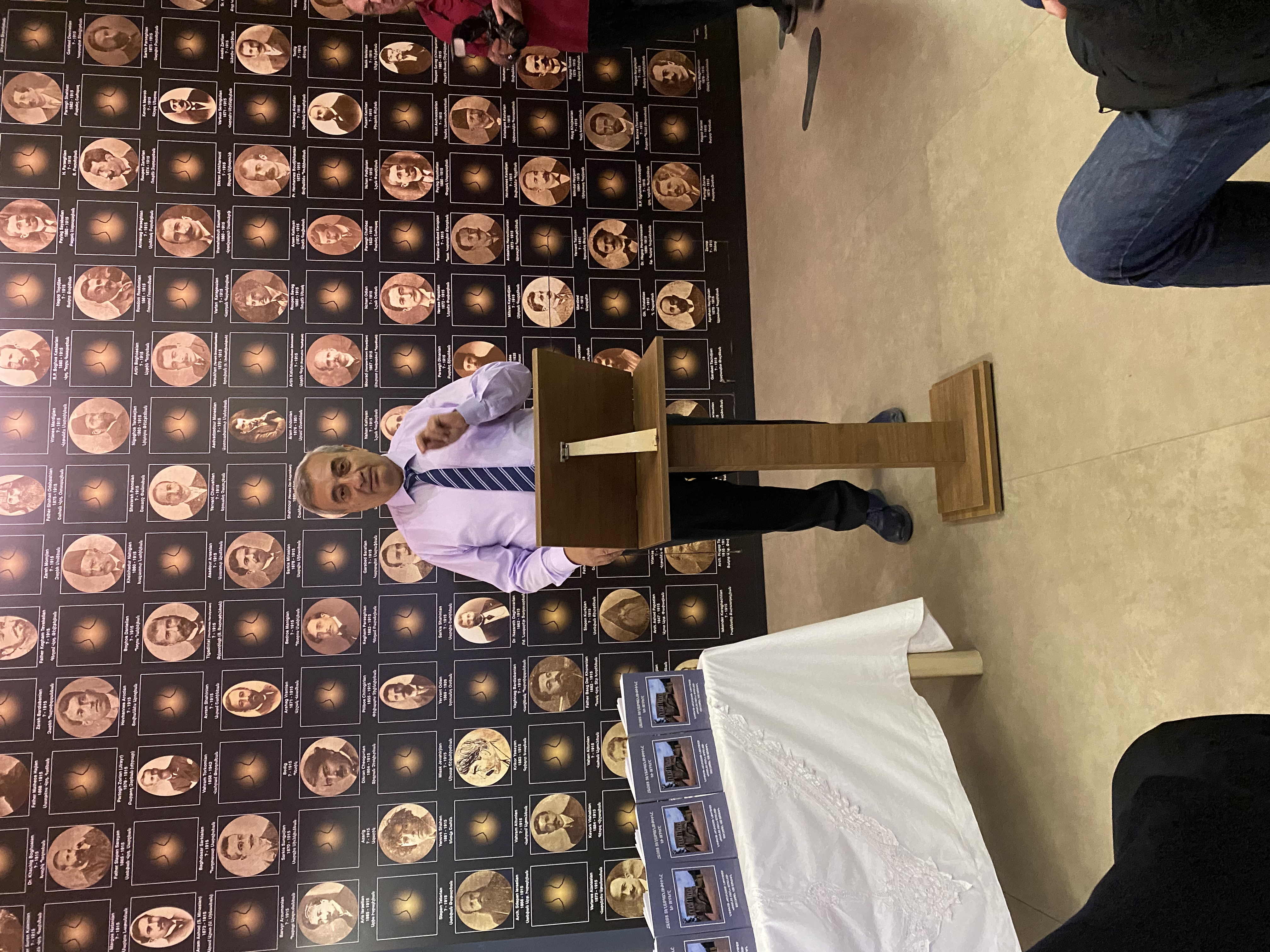
A special importance has been given to the internationally accepting task- the Genocide of Armenians. On the 80th anniversary of that brutality, the Museum-Institute of the Armenian Genocide was built. In a short period the new created organised the scientific exhibition of the Genocide events, were compiled the collection of documents and the accounts of survivors, were hold several international conferences (Head-L. Barsegyan). The quantity of the annual visitors of the Museum exceeds 250 000 people.
Putting in a circulation some fresh materials, the important events in the History of Armenia of the 1917-1923 period and the policy of the Great Powers towards it (G. Galoyan), and some separate tasks of that period (H. Avetisian) have been written in a new light. Separate research has been done in the problematic issues on Arcax, Gavaxq, etc. The results of the works in historiography of the last decade will be summarised in a forthcoming 4-volume work of the full history of Armenians.


News & Announcements


Institute of History initiated to create the unbiased and complete history of the Armenian people. "News & Announcements"

Has been published the monograph of the scientist of the Institute of History of NAS RA, Ph. D., associate professor Hovakim Boyajyan "Pogos Nubar Pasha and the Problem of the Reforms in Western Armenia in 1912-1914".

The monograph of Doct. Svazyan H. S. is dedicated to the political, social-economic history of Aluank from the ancient times to the VIII century A. D.

The Fellowsoldiers of Napoleon: History and Myths, Yerevan, Publishing House <>, 2009. The book of the senior researcher of the Institute of History of NAS RA, Doctor V. Poghosyan composed of three sketches is dedicated to the Armenian-Mamelukes the fellowsoldiers of Napoleon.

In the book published by Artak Maghalyan is presented the Armenian translation of the work of the Russian historiographer of the 18th cent. V. Bratischev “An Explanation about the Unfortunate Events between Nadir Shah and his Elder Son Riza-Ghuli Mirza”.

One of the significant results the Institute achieved in 2008 is the publication of “The history of the controversies between Greeks and Armenians writen by Parthenios from Athens the Metropolitan of Caesarea of the Palestine” published by academician Hrach Bartikyan. The book contains an original text in Greek writen by A. Papadopoulos-Keramevs enclosed with an Armenian preface, translation and notes writen in Armenian by H. Bartikyan. It presents the centuries-old history of the sharp controversy between Armenians ang Greeks over the residence of Armenian patriarch of Jerusalem St. Jacob monastery and concerning the subjection of the Syrian, Coptic and Abyssinian communities of the region.

The book of V. Poghosyan sheds light on the approach and assessment of French historiography on the Armenian massacres of 1909 committed in Cilicia. The author notes that these massacres were organized and perpetrated by both the Young Turks and the ancient regime and constitute an important link in the process of the Armenian Genocide (1894-1922). In fact, the contemporary French historians characterize the killings of 1894-1896 and 1909 as an introduction to the Armenian Genocide of 1915.

The book entitled “The Meliqdoms of Artsakh (Karabagh) and Meliq Houses in the 17-19th centuries” by a young historian Artak Maghalyan (Ph.D. of historical sciences) is also of significance in the research activities of the Institute in 2008. The monography enlightens one of the important periods of the history of Armenian people. It deals with the problems of Armenian rulers’ (meliqs’) dominions (meliqdoms) in Artsakh. The matters of rights and delegations of the mentioned rulers are discussed upon the broad basis of historical literature, as well as archival documents and lithographical materials that have been newly brought to light.


The work of Vahram Gharakhanyan “Armenian Activities of the Calouste Gulbenkian Foundation” is dedicated to an actual and almost untouched theme. It concerns the enlightenment of the benevolent, Armenian favouring activities of the Calouste Gulbenkian Foundation, a charitable and scientific-cultural organization. The Foundation was established in Portugal in 1956 in accordance with the terms of the Will of the world-famous oil tycoon Calouste Sarkis Gulbenkian (1869-1955).

"New Publications"


Copyright © 2007 NAS RA Institute of History. All rights reserved. Site developed by Impresario Productions.