




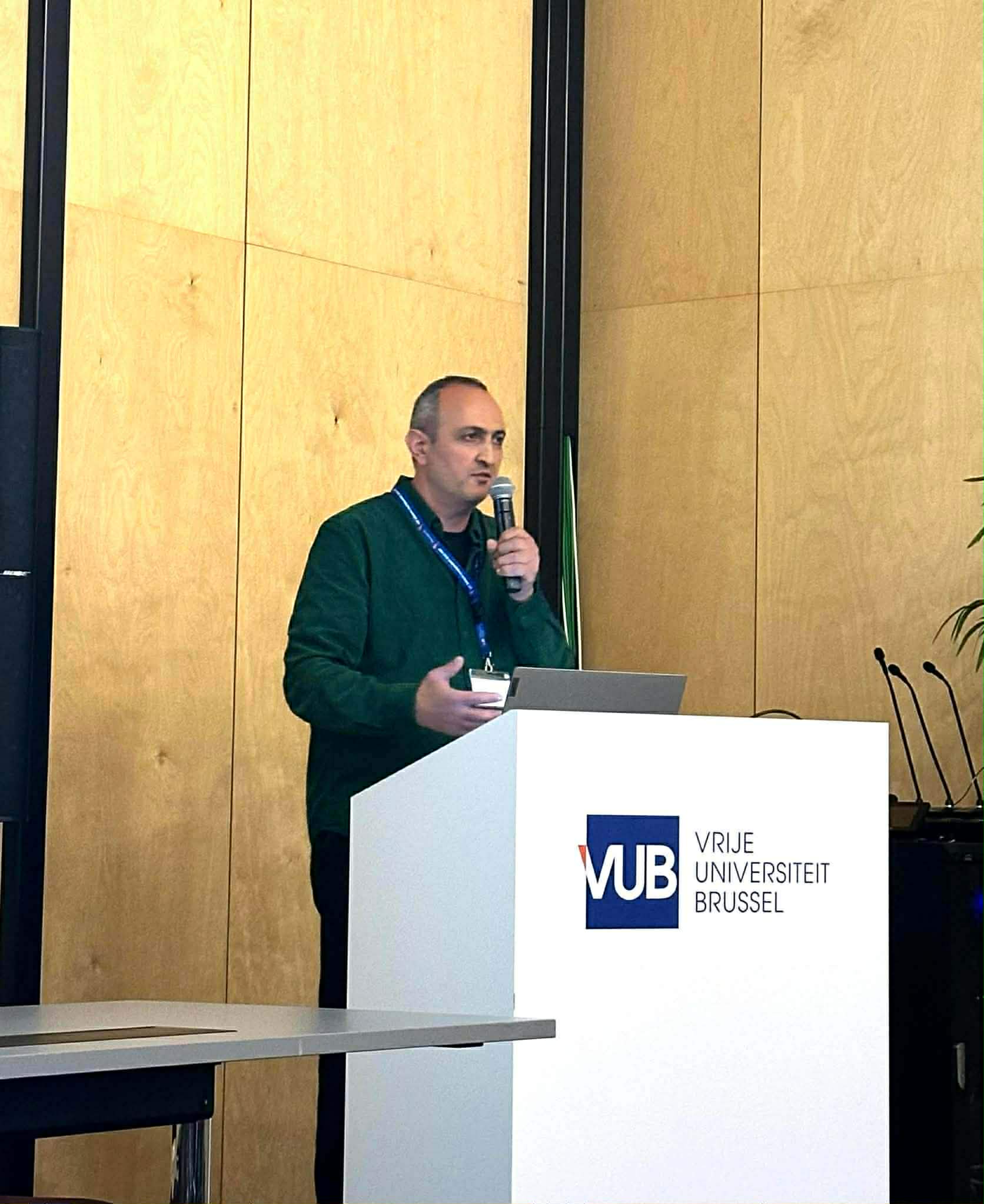
Z. Gevorgyan, Senior Researcher at the Institute of History of the National Academy of Sciences of the Republic of Armenia and Head of the Department of Medieval History, participated in the international medieval studies conference “Studying Non-Elites in the Medieval Caucasus: First International Conference of the Medieval Caucasus Network,” held in Brussels, the capital of Belgium, on March 13–14, 2026. He delivered a presentation titled “Women, Private Property, and Power: How Trade Changed the Social Position of Women from Greater Armenia to Cilician Armenia (12th–14th Centuries).”
In the Middle Ages, the wide circulation and accessibility of paper created an opportunity for different social strata, including women, to document and manage private property and, as a result, to shape and secure their social status. How did the development of international and local trade lead to social transformations, as a result of which the social and legal positions of women also changed? In medieval Armenian legal compilations, particularly in the law codes of Mkhitar Gosh and Smbat the Constable, there are numerous laws concerning women’s rights and their property. The main aim of the report is to present how commercial relations in medieval Armenian societies influenced various social transformations, particularly changes in the social and legal positions of women.